

Many people above 60 notice changes in balance and mobility. The good news is that with the right kind of gentle exercise, your body can improve at any age. After 60, the body naturally slows down. Muscles become weaker. Joints feel tighter. Balance may not be as strong as before.
But here’s something very important to remember: These changes can be managed and improved with regular movement. What your body needs is safe, low-impact, consistent movement.
In this guide, we’ll explore how simple, rhythmic movement can completely transform your stability, keep you independent, and put a spring back in your step.
The Real Pain Point: Why Taking it Easy Might Be Hurting You
It’s a natural instinct: when we feel unsteady, we move less. We sit more. We avoid the garden or the park because we’re afraid of uneven ground. This is what experts call the Fear of Falling Cycle.
● Physical Decline: When you stop moving to stay safe, your muscles get weaker.
● Stiff Joints: Without movement, the fluid in your joints dries up, making every step feel
crunchy or painful.
● Brain-Body Disconnect: Your brain loses the habit of telling your feet how to react to a trip or a slip.
The truth is, "taking it easy" can actually increase your risk of injury. To stay steady, your body needs gentle, consistent, and multi-directional movement. That is exactly where Light Zumba for Seniors comes in.
The Solution: What is Light Zumba (Zumba Gold)?
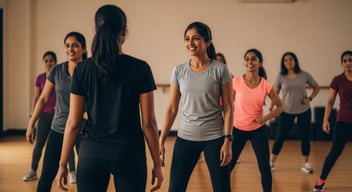
You might have seen videos of high-energy Zumba classes with people jumping and sprinting. That is not what we do here. Light Zumba, often called Zumba Gold, is a modified version of the famous dance-fitness program. It is specifically designed for the anatomical needs of those aged 60 and better. We use the same upbeat Latin and International music, but we take out the jumps, the lunges, and the high-impact twists.
Instead, we focus on:
● Flowing movements that protect the spine.
● Steady pacing that builds heart health without over-exhaustion.
● Simple patterns that anyone can follow, regardless of dance experience.
5 Ways Light Zumba Rebuilds Your Mobility
How can dancing to a beat actually make you safer in your daily life? It comes down to these five biological "upgrades" your body receives:
1. Strengthening the Anchor Muscles
Most falls happen because our "stabilizer muscles", the small muscles in our ankles and the sides of our hips are weak. Light Zumba uses side-to-side steps that target these specific areas.
Strengthening these anchors means that if you do catch your foot on a rug, your legs are strong enough to stabilize you instantly.
2. Enhancing Proprioception
Proprioception is your brain’s ability to know where your limbs are without looking at them. By following rhythmic patterns, you are "re-wiring" the neurological connection between your mind and your feet. This makes you much more confident when walking in low light or on thick carpets.
3. Joint Lubrication and Synovial Flow
Think of your joints like a rusty gate. If you don't move them, they get stuck. The flowing, circular motions of a Zumba session gently stimulate the production of synovial fluid, your body’s natural WD-40. This reduces the "grinding" feeling of arthritis and makes reaching and bending much easier.
4. Cognitive Cross-Training
Balance isn't just in the legs; it’s in the brain. Learning a simple 4-step dance sequence requires "spatial awareness." This mental exercise keeps your brain sharp and improves your reaction time, which is your #1 defense against trips and falls.
5. Core Stability Without Crunches
You don't need to lie on the floor to get a strong core. Every time you sway your hips or reach your arms during Zumba, your abdominal and back muscles engage to keep you upright. This "functional core strength" supports your spine and improves your posture.
The Emotional Benefit Most Seniors Love
Physical change is important. But emotional change matters too.
Many seniors who join Zumba say they feel:
● Happier
● More social
● Less lonely
● More confident
Because Zumba is done with music and group energy, it doesn’t feel like boring exercise. It feels like an enjoyable movement time.
Simple Tips for Staying Safe While Dancing
Your safety is our #1 priority. If you’re practicing at home or joining us in the studio, keep these tips in mind:
● The Shoe Factor: Avoid running shoes with heavy treading, as they can catch on the floor during a turn. Look for a cross-trainer or a dance sneaker with a smoother sole.
● Use a Support if Needed: There is no shame in keeping one hand on a sturdy chair or a wall. This is called "Supported Zumba," and it’s a brilliant way to build confidence while staying 100% secure.
● Small Steps Win: You don't need to take giant strides. Keeping your steps small and underneath your body keeps your weight centered and safe.
● Listen to Your Breath: You should feel warm and slightly breathless, but never gasping. If you can't sing along to a few words of the song, slow down!
● The Hydration Habit: Sip water every 10 minutes. Seniors often lose the sensation of thirst, so don't wait until you're thirsty to drink!
Why Seniors Love Tiju’s Zumba
We aren't just a fitness class; we are a family. When you join Tiju's Zumba, you get:
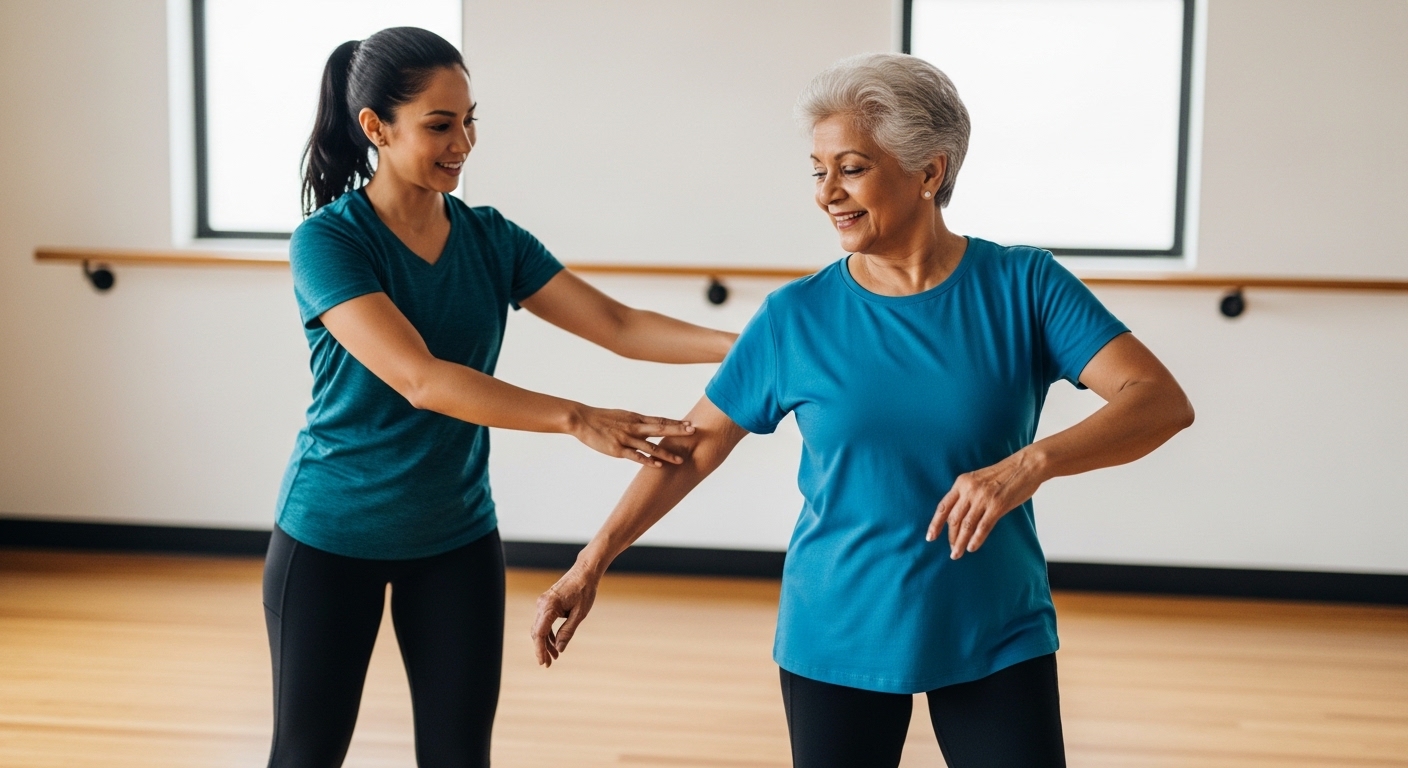
● Patience-First Instruction: Our teachers don't rush. We break down every move until everyone feels comfortable.
● Joint-Friendly Surfaces: We ensure our environment is designed to be easy on the knees and ankles.
● Emotional Lift: It’s hard to feel blue when you’re listening to upbeat music and smiling with friends. The mental health benefits of Zumba are just as big as the physical ones!
● Holistic Wellness: We combine physical movement with breathing techniques that lower blood pressure and reduce the stress of ageing.
Conclusion
Ageing doesn't have to mean slowing down. It doesn't have to mean living in fear of a trip or a stumble. By spending a little time each week moving to the music, you are reclaiming your body.
You are choosing to be strong, flexible, and most importantly, independent. We see the transformation every day. We see seniors walk in with a cane and, a few months later, walk in with a smile and a steady stride.
Are you ready to feel steady again?
Claim Your Balance & Mobility - Get started!
Frequently Asked Questions (FAQ)
1. Is Zumba safe after 60?
A: Yes. When it is senior-friendly light Zumba guided by trained instructors. High-impact jumping workouts are not recommended, but gentle Zumba is safe for most seniors.
2. I have knee pain. Can I still join?
A: In many cases, yes. Light Zumba is low impact. However, if you have severe pain or medical conditions, it’s best to check with your doctor first.
3. Do I need dance experience?
Not at all. Our senior Zumba session is designed for complete beginners. Simple steps, slow pace, easy to follow.
4. How many days per week is ideal?
A: For seniors, 2 to 3 sessions per week works very well.
5. Is Light Zumba better than just walking?
A: Walking is great, but it only moves you in one direction (forward). Zumba moves you sideways, backward, and in circles. This "multi-planar" movement is much better for preventing falls.
6. What if I have Vertigo or inner-ear issues?
A: We recommend moving your feet but keeping your head relatively still. Our instructors can show you how to modify the "turns" so you never feel dizzy.
Can I do this with Osteoporosis?
A: Yes! Weight-bearing exercise like Light Zumba is actually recommended to help maintain bone density. Just avoid any deep twisting of the spine, which our "Gold" program already does for you.
8. What if I have a heart condition or high blood pressure?
A: Always check with your doctor first. However, Light Zumba is a "steady-state" cardio exercise that most doctors highly recommend for strengthening the heart muscle and improving circulation.