


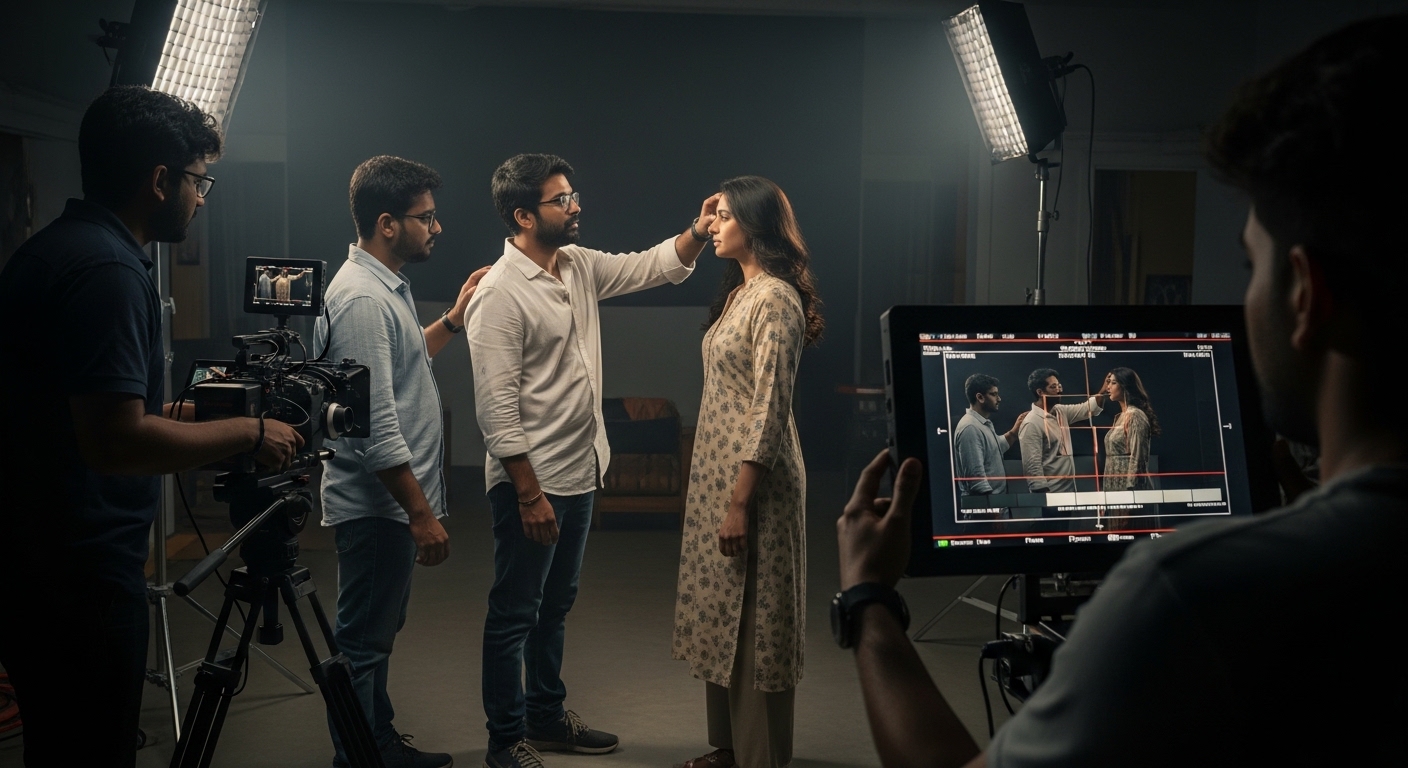
Imagine watching a movie scene where two people are talking. Something feels strange. The conversation looks awkward. The emotions don’t feel real.
You may not know why… but something is wrong.
Often, the problem is eyeline.
Eyeline may look like a small technical detail, but in filmmaking and video production, it can change the entire meaning of a scene. A simple change in where a character looks can decide who holds the power in the frame, where the audience focuses, and how the story feels.
Professional filmmakers understand this secret very well. That is why their scenes feel natural, emotional, and cinematic.
If you want to become a content creator, filmmaker, YouTuber, or media professional, understanding eyeline is one of the most important visual storytelling techniques you should learn.
What is Eyeline in Filmmaking?
In simple words, eyeline means the direction a person is looking inside a shot.
It tells the audience what the character is focusing on.
This might sound very simple, but it plays a huge role in cinematography, filmmaking, and visual storytelling.
For example:
- If a character looks directly into the camera, it feels like they are speaking to the audience.
- If they look slightly off-camera, it feels like they are talking to someone else.
- If they look down, it may show sadness or deep thinking.
- If they look up, it can suggest hope or curiosity.
Our eyes naturally follow where another person is looking. Filmmakers use this human behavior to guide the audience’s attention.
That is why eyeline is considered one of the most important cinematography basics.
Why Eyeline is Important in Visual Storytelling?
Good storytelling in video is not only about dialogue or acting. It is also about how the scene is visually arranged.
Eyeline helps in many ways.
1. It Makes Conversations Look Real
When two people talk in a film or video, their eyelines must match.
If one person looks left and the other person also looks left, it will look like they are not facing each other. The scene will feel strange.
But when the eyelines are placed correctly, the conversation feels natural. This is a basic rule in professional video production and filmmaking.
2. It Guides the Audience’s Attention
The audience usually looks in the same direction where a character looks.
For example:
If a character suddenly looks toward the door, viewers automatically expect something to happen there.
Without saying a single word, the filmmaker has guided the audience.This is one of the most powerful visual storytelling techniques used in cinema.
3. It Shows Emotion Without Dialogue
Eyeline also helps show emotions. A character who avoids eye contact may feel nervous or guilty. A character looking straight at someone may show confidence or power.
These small details help tell the story without extra dialogue. That is why professional filmmakers always pay attention to camera framing and eyeline placement.
Real Cinema Examples of Eyeline Power
To understand eyeline better, let’s look at some common examples in films and videos.
Interview Videos
In most interview videos, the person does not look directly at the camera. Instead, they look slightly to the side at the interviewer. This creates a natural conversation feeling.
This is a common technique used in documentaries and professional video production.
Dialogue Scenes in Movies
In movie conversations, filmmakers use something called shot-reverse-shot. This means the camera switches between two characters while they talk.
For this to work, the eyeline must stay consistent. One character looks right, the other looks left.
This keeps the scene visually clear and believable.
Social Media Videos
Even on platforms like YouTube or Instagram, eyeline matters. Creators who talk directly into the camera build a stronger connection with viewers. But if the creator keeps looking away randomly, the video may feel unprofessional.
That is why many successful content creators learn basic filmmaking techniques.
Common Eyeline Mistakes Beginners Make
Many beginners focus only on equipment like cameras or lights. But they forget the small details that make a video look professional.
- Here are some common mistakes:Characters looking in the wrong direction during conversations.
- Looking directly at the camera when talking to someone off-screen.
- Inconsistent eyelines between different shots.
- Actors not knowing where to focus their eyes
These mistakes may look small, but they can make a video feel confusing or unnatural.
Learning proper video production skills helps avoid these problems.
Simple Tips to Use Eyeline Correctly
If you are starting in filmmaking, videography, or content creation, these simple tips will help.
Tip 1: Plan the Scene Before Shooting
Before recording, decide where each character will look. This helps maintain consistent eyelines.
Tip 2: Use the 180-Degree Rule
The 180-degree rule is a basic rule in cinematography. It keeps characters looking toward each other and prevents confusing direction changes.
Tip 3: Mark the Eyeline for Actors
Sometimes actors don’t know where to look. Filmmakers often place a small mark near the camera so actors know the correct eyeline.
Tip 4: Check Eyeline During Editing
While editing videos, check if eyelines match between shots. If they don’t match, the scene may feel disconnected.
These simple habits improve the quality of your video storytelling and filmmaking projects.
Why Media Education Matters?
Many people think filmmaking is only about creativity. But professional media work also requires technical knowledge and practice.
Learning media skills helps students understand:
- Cinematography basics
- Camera angles and framing
- Lighting techniques
- Storytelling structure
- Video editing skills
- Visual communication
With proper training, students learn how to turn simple ideas into powerful visual stories.
Why Learn Media Skills at Tiju’s Media School
The media industry is growing fast. Today, companies need skilled people for:
- Video production
- Social media content creation
- Filmmaking
- Photography
- Digital storytelling
Students learn practical skills that help them enter the media industry confidently.
The focus is not only on theory but also on real practical learning.
Students get exposure to:
- Camera handling
- Professional video production
- Editing techniques
- Storytelling skills
- Content creation for digital platforms
This kind of training helps creative students turn their passion into a real career opportunity.
Final Thoughts
In filmmaking, small details often create the biggest impact. Eyeline may look like a tiny technique, but it plays a huge role in visual storytelling and cinematic composition.
When filmmakers control where characters look, they control how the audience feels and understands the story.
Once you start noticing eyeline in films, you will never watch movies the same way again.
Start Your Media Journey Today
If you are passionate about filmmaking, video production, photography, or content creation, learning the right techniques can change your future.
Join Tiju's Media School and start learning the skills that turn creative ideas into powerful visual stories.
Your journey into the world of media can begin today.
[Start learning today]
Frequently Asked Questions
Q: What is eyeline in filmmaking?
A: Eyeline refers to the direction a character looks within a scene. It helps guide the audience’s attention and makes conversations feel natural.
Q: Why is eyeline important in movies?
A: Eyeline helps create realistic conversations, emotional connection, and clear visual storytelling.
Q: Can beginners learn eyeline techniques easily?
A: Yes. With proper guidance and practice, beginners can quickly understand how to use eyeline effectively.
Q: Do YouTubers and content creators need eyeline knowledge?
A: Yes. Understanding eyeline helps make videos look more professional and engaging.


.jpg?width=352&name=How%20to%20Start%20Your%20Career%20in%20Media%20After%20Plus%20Two%20(Complete%20Beginner%20Guide).jpg)