


Visual Language in Cinema: How Frame Composition Shows Emotional Distance Between Characters

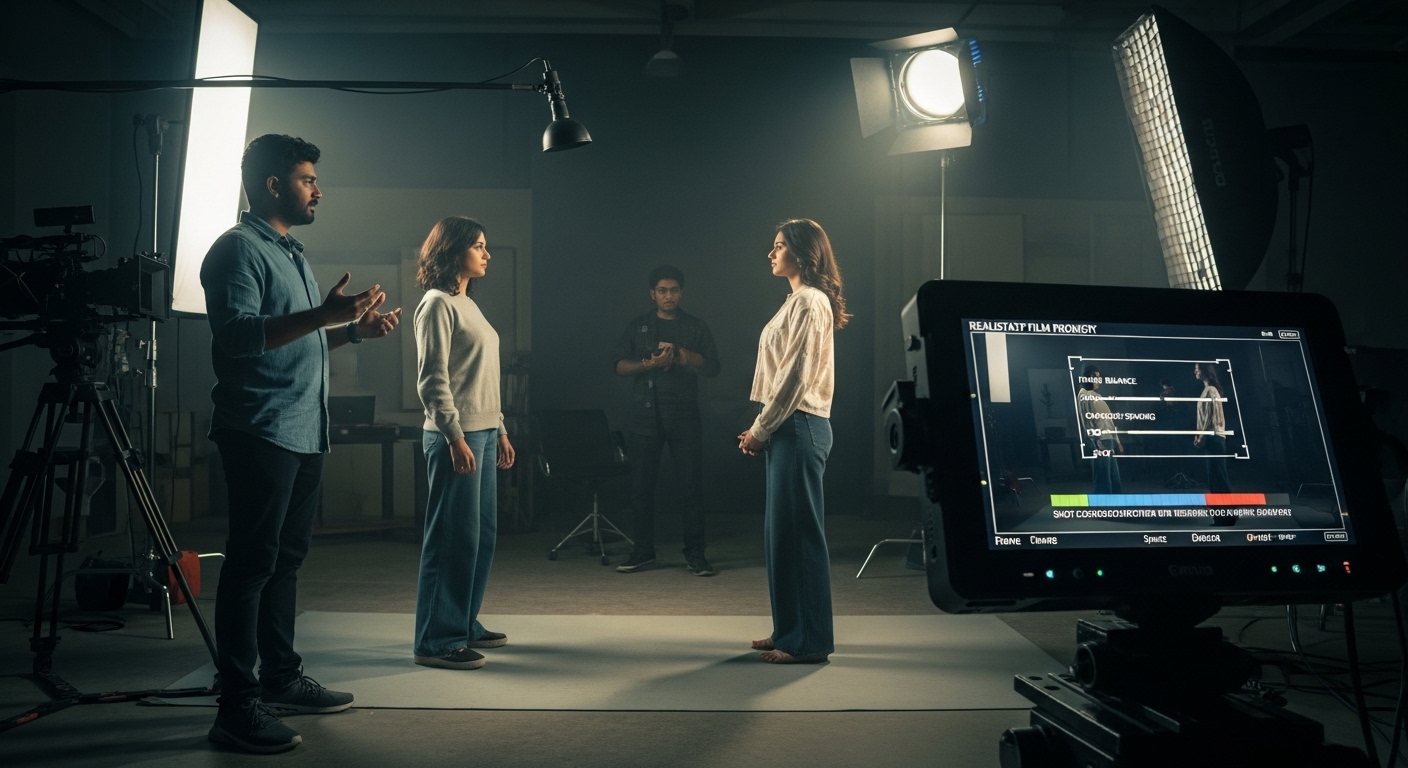
Simple Techniques Every Filmmaker Should Know
In cinema, not every story is told through dialogue. Some of the most powerful emotions in a film are expressed without a single word. A small pause, the distance between two characters, or the way a scene is framed can quietly reveal what the characters are truly feeling.
This is where visual language in cinema becomes important. Filmmakers use framing, composition, space, and camera placement to communicate emotions that dialogue alone cannot express. The audience may not consciously notice these choices, but they still feel their impact.
A beautiful example can be seen in the film 96. In many scenes, the characters Ram and Jaanu appear in the same frame, yet they are often placed on opposite sides. That simple visual choice reflects their emotional distance and the life paths that have separated them. Without heavy dialogue, the camera already tells the story.
This is the power of visual storytelling. When filmmakers understand visual language, even the smallest shot can carry deep meaning. For anyone who wants to learn filmmaking, cinematography, or video creation, understanding how visuals communicate emotions is an essential skill.
In this blog, we will explore how visual language works in filmmaking, why frame composition matters, and how simple visual techniques can make a scene more meaningful and emotionally powerful.
What is Visual Language in Cinema?
Visual language is the way filmmakers communicate emotions and ideas through images instead of words.
In everyday life, we understand emotions by observing people.
For example:
- A person standing alone may look lonely.
- Two people sitting close together may look comfortable.
- Someone standing far away may show distance or conflict.
Cinema uses the same idea. Through camera framing, composition, lighting, and movement, filmmakers create a silent language that the audience understands naturally.
This is why great films feel emotional even when characters say very little.
In filmmaking, visual language includes:
- Frame composition
- Character placement
- Camera angles
- Camera movement
- Lighting
- Colors
When these elements work together, they tell a powerful story.
The Problem Most Beginner Filmmakers Face
Many beginners believe filmmaking is mainly about:
- Expensive cameras
- Editing software
- Fancy equipment
But that is not true. You may have a good camera, but if the visual storytelling is weak, the scene will feel empty.
For example, imagine filming a couple talking after a breakup.
If both characters stand close together in the center of the frame, the scene might not show emotional tension.
But if the filmmaker places them far apart on opposite sides, the audience immediately feels the distance between them.
This is visual language in action. Without understanding this, many creators make videos that look good technically but do not create emotional impact.
Frame Composition: The Heart of Visual Storytelling
Frame composition means how elements are arranged inside the camera frame.
This includes:
- Where characters stand.
- How much space is between them.
- What objects appear in the background.
- How the camera frames the scene.
Every choice changes the meaning of the scene.
Center Framing
When a character is placed in the center, it shows:
- Confidence
- Importance
- Power
This technique is often used in dramatic scenes.
Two Characters in One Frame
When two characters share the same frame, it usually shows:
- Connection
- Conversation
- Emotional closeness
But the distance between them still matters.
Opposite Side Framing
This technique is powerful.
When characters are placed far apart within the frame, it shows:
- Emotional distance.
- Unresolved feelings.
- Tension in the relationship.
Many filmmakers use this method to show love that cannot fully come together.
Cinema Example: Visual Language in “96”
The romantic drama 96 is a beautiful example of visual storytelling.
The characters Ram and Jaanu share deep emotions and memories. But life has taken them in different directions.
Instead of explaining everything through dialogue, the film uses frame composition.
Many scenes place them:
- At opposite ends of the frame.
- Separated by objects.
- Divided by space.
Even when they sit together, the camera reminds us that something stands between them.
This visual distance tells the audience:
Their love is real, but their lives have moved apart. The audience feels the emotion without needing explanations. That is the magic of visual language in cinema.
Simple Visual Language Techniques Every Filmmaker Should Know
You do not need a big budget to use visual language. Even with a smartphone camera, you can use these techniques.
1. Use Space to Show Emotion
Distance between characters can express feelings.
Examples:
- Close distance → comfort
- Medium distance → casual interaction
- Far distance → emotional separation
When shooting a scene, ask yourself: “What does the space between these characters mean?”
2. Use Background Objects
Objects inside the frame can create separation.
Examples:
- A door between two characters.
- A window frame dividing them.
- A table between them.
These elements silently show conflict or distance.
3. Use Camera Angles
Camera angles also tell stories.
- Low angle shots show power.
- High angle shots show vulnerability.
Even slight changes in angle can affect how the audience feels about a character.
4. Let the Frame Breathe
Beginner filmmakers often place everything in the center. Instead, allow empty space.
Empty space in a frame can show:
- Loneliness
- Waiting
- Silence
- Emotional weight
Sometimes what you do not show is more powerful than what you show.
Real Life Example: Visual Language in Daily Life
Visual storytelling is not only for cinema. Even in real life, we read visual signals.
Imagine entering a room. Two friends are sitting close together and laughing. Another person is standing alone near the wall.
Without hearing any conversation, you already understand the situation. That is visual language.
Filmmakers simply use the same human instinct to tell stories through images.
Why Learning Visual Language is Important for Modern Creators?
Today, everyone is creating videos:
- YouTubers
- Vloggers
- Instagram creators
- Filmmakers
But only a few truly understand visual storytelling.
If you learn visual language, your videos will:
- Feel more cinematic
- Create emotional impact
- Connect better with viewers
Even simple scenes will feel meaningful. This is why filmmaking education is important.
Learning from professionals helps you understand the techniques used in real cinema.
Why Learn Filmmaking at Tiju’s Media School?
If you are passionate about cinema and visual storytelling, learning in the right environment makes a big difference.
Tiju's Media School focuses on practical filmmaking knowledge rather than just theory.
Students learn:
- Cinematography basics
- Frame composition
- Visual storytelling techniques
- Editing and filmmaking workflow
- Real cinema examples
The goal is simple. To help students understand the language of cinema and use it confidently in their own creative projects.
Experienced mentors guide students step by step so they can develop their own storytelling style.
Simple Practice Exercise for Beginners
Try this small exercise. Take your phone camera and shoot two shots.
Shot 1
Two friends standing close together in the frame.
Shot 2
The same friends standing on opposite sides of the frame.
Now compare the two shots. Even without dialogue, the feeling changes.
This is visual language at work. Practicing simple exercises like this helps you understand how framing shapes emotions.
Conclusion
Cinema is more than just recording scenes. It is a language.
Through framing, space, and composition, filmmakers express emotions that words cannot fully describe.
Movies like 96 show us how powerful visual storytelling can be. A simple decision like placing two characters on opposite sides of the frame can reveal an entire emotional history.
For anyone who wants to become a filmmaker, cinematographer, or content creator, learning visual language in cinema is essential.
Once you start noticing it, you will never watch films the same way again.
Start Your Filmmaking Journey
If cinema excites you and you want to understand how filmmakers create such powerful visuals, it is time to learn the craft.
At Tiju's Media School, students learn the real language of cinema through practical training and creative exploration. Your story deserves to be told beautifully.
Take the first step today and start learning the art of visual storytelling and filmmaking.
[Click Here] [Talk to our Faculty Today!]
Frequently Asked Questions?
Q. What is visual language in filmmaking?
A: Visual language is the method filmmakers use to communicate emotions and ideas through images instead of dialogue. It includes frame composition, camera angles, lighting, and character placement.
Q. Why is visual storytelling important in cinema?
A: Visual storytelling allows filmmakers to show emotions naturally. Instead of explaining everything with dialogue, images create deeper emotional impact.
Q. Can beginners learn visual language easily?
A: Yes. With practice and proper guidance, beginners can understand visual storytelling techniques and start applying them in their videos.
Q. Do I need expensive cameras to use visual language?
A: No. Visual language is about how you frame and compose a shot, not about expensive equipment.
Q: Is visual language only for sad movies?
A: Not at all. You can use it to show power, love, fear, or even comedy. It’s the "silent script" of your movie.

.jpg?width=352&name=How%20to%20Start%20Your%20Career%20in%20Media%20After%20Plus%20Two%20(Complete%20Beginner%20Guide).jpg)