


We all have those mornings where we wake up feeling heavy before the day has even started. You reach for your glucometer, you think about what you’re "allowed" to eat for breakfast, and you wonder if you’ll ever feel like "the old you" again. Living with diabetes can feel like you’re carrying an extra weight on your shoulders every single hour of the day. It’s exhausting to always be calculating, always worrying, and always be checking.
But here is something nobody tells you: your body still knows how to heal. It hasn’t forgotten how to find balance; it just needs a little bit of quiet and the right kind of movement to remember how.
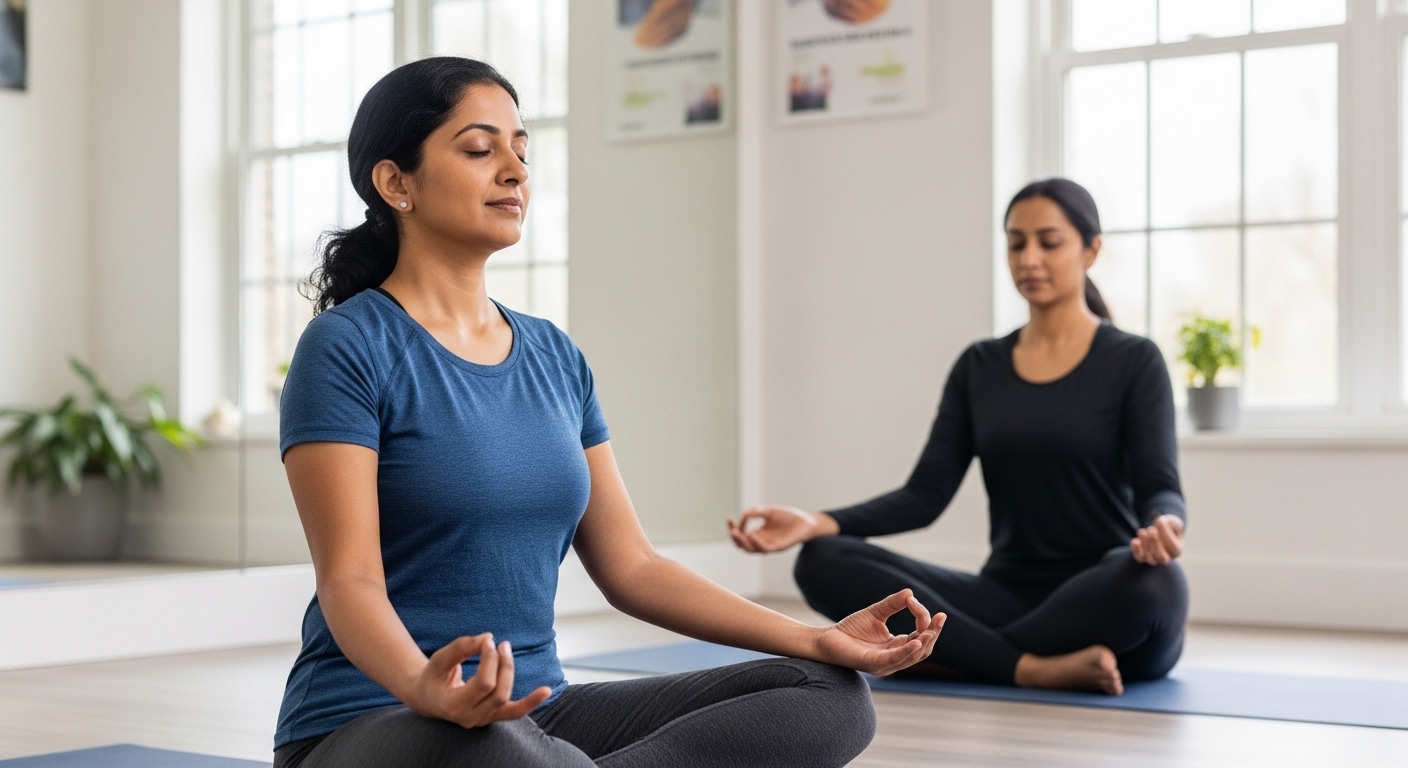
Yoga isn’t just a workout; for someone with diabetes, it’s a way to talk to your body. When you move through these gentle poses, you are telling your nervous system to calm down, your blood to flow better, and your insulin to do its job more effectively. It’s a natural, honest way to take back control.
The Invisible Connection: Stress, Your Mind, and Your Blood Sugar
To understand why yoga works, we have to talk about what’s happening inside when you’re stressed. Most of us live in a state of "high alert." Whether it’s work deadlines, family responsibilities, or the constant management of your health, your brain often feels like it’s under
attack.
When you are stressed, your body releases a hormone called cortisol. In the short term, cortisol is helpful; it's what helped our ancestors run away from danger. But in the modern world, cortisol stays high all the time. For someone with diabetes, this is a major problem because cortisol tells your liver to dump extra sugar into your bloodstream for "quick energy."
This is why your sugar might spike even when you haven't eaten anything "bad." It’s not your fault; it’s your nervous system.
This is where the magic of Tiju’s Academy comes in. We focus on the "Parasympathetic Nervous System", your body's internal braking system. Yoga and Pranayama act like a dimmer switch for stress. By slowing down your breath and moving your joints, you are literally telling your brain, "We are safe. You can lower the sugar levels now."
Simple Yoga Poses You Can Do Anywhere
We believe that the best yoga is the yoga you actually do. You don't need a fancy studio. You can do these in your living room, or even in a chair. We focus on movements that help your internal organs, specifically your pancreas, do their job better.
1. The Seated Twist (Ardha Matsyendrasana)
This is often called the "King of Poses" for diabetes. Imagine your internal organs are like a wet sponge. When you twist, you are gently "wringing out" the old blood and toxins. When you release the twist, fresh, oxygenated blood rushes back in.
● The Feeling: It shouldn't feel like a sharp pull. It should feel like a deep, satisfying stretch in your midsection.
● The Benefit: By gently compressing the abdominal area, you are stimulating the pancreas and the liver. Over time, this helps improve digestion and can make your body more sensitive to the insulin you produce or take.
● How to do it: Sit comfortably. If you’re on the floor, cross one leg over. If you’re in a chair, sit tall. Gently turn your shoulders to the right, using the back of the chair for support. Take three deep breaths into your belly, then switch sides.
2. Legs Up the Wall (Viparita Karani)
If you deal with "diabetic neuropathy" or just have tired, swollen feet at the end of the day, this pose will be your new best friend.
● The Feeling: It feels like the weight of the world is literally draining out of your legs. It is incredibly relaxing for the heart.
● The Benefit: Gravity usually pulls blood down into our feet. By reversing that, you help your circulation move back toward your heart and your vital organs. It also lowers your heart rate almost instantly.
● How to do it: Find a clear patch of wall. Sit sideways against it, then swing your legs up as you lie back. Rest your arms by your sides. Close your eyes and just be for five minutes.
3. Child’s Pose (Balasana)
There are days when the world feels too loud. A child's pose is your "reset button."
● The Feeling: It’s a feeling of safety and folding inward.
● The Benefit: This pose gently stretches the lower back and calms the adrenal glands (the ones that produce that stress hormone, cortisol).
● How to do it: Kneel on your mat, sit back on your heels, and fold your body forward until your forehead touches the ground. If your head doesn’t reach, rest it on a pillow. Let your shoulders melt.
4. The Bridge Pose (Setu Bandhasana)
This pose is great for your metabolism and your thyroid.
● The Feeling: It feels like an opening in your chest and a strengthening in your legs.
● The Benefit: It opens up the front of the body, which is usually hunched over phones or computers. This improves your lung capacity, meaning more oxygen gets to your cells to help burn glucose.
● How to do it: Lie on your back with your knees bent. Lift your hips toward the ceiling while keeping your shoulders on the floor. Hold for a few breaths and slowly roll back down.
The Power of Your Breath: Pranayama
We often say: "If you can breathe, you can do yoga." For many people with diabetes, physical exercise can sometimes be intimidating. But your breath is a tool you carry with you 24/7.
Pranayama for diabetes isn't just about breathing; it's about changing the chemistry of your blood. Kapalbhati (The Shining Breath)
This is a more active breathing technique. It involves short, forceful exhales from the belly.
● Why it works: It acts like a massage for your internal organs. It generates "internal heat" which helps improve your metabolic rate. Think of it as waking up your pancreas with a gentle tap.
Anulom Vilom (Alternate Nostril Breathing)
This is the ultimate stress-killer.
● Why it works: It balances the left and right sides of your brain. If you find yourself "stress-eating" or feeling anxious about your blood sugar readings, three minutes of this will bring you back to a place of logic and calm. It’s like cleaning a foggy window so you can see clearly again.
Understanding the "Why" (The Science Made Simple)
You might be wondering, "How can stretching my arms and breathing deeply actually change my blood sugar?" It sounds almost too simple to be true.
But the science is clear. Diabetes is a metabolic disorder, and yoga is a metabolic therapy.
1. Muscle Glucose Uptake: Even gentle yoga uses your muscles. When muscles work, they "eat" glucose for fuel. This pulls sugar out of your bloodstream naturally.
2. Organ Stimulation: Many yoga poses involve "compression and release." This improves the blood flow to the pancreas, helping it function at its best.
3. Endocrine Balance: Your hormones are all connected. When you balance your stress hormones (adrenals), your metabolic hormones (insulin) can finally find their rhythm.
Why Choose Tiju’s Academy?
We know there are thousands of yoga videos online. But, we do things differently. We understand that everyone's body is different. What works for a 20-year-old athlete won't necessarily work for someone managing a chronic condition.
We focus on:
● Safety First: We teach you how to modify every pose so you never feel pain.
● Consistency over Intensity: We don't want you to do yoga for two hours once a month. We want to show you how to do it for ten minutes every single day.
● Real Solutions: We address the specific problems people with diabetes face like circulation issues, fatigue, and mental stress.
Making Yoga a Part of Your Life
The hardest part of yoga isn't the poses, it's getting on the mat. We recommend building a "Wellness Anchor."
Pick one time a day, maybe right after you brush your teeth or right before you eat dinner and commit to just one pose and one minute of breathing. Once you start feeling the "Yoga High" (that feeling of lightness and clarity), you won't want to stop.
A Few Gentle Reminders:
● Hydrate: Water helps flush out the toxins your yoga practice is moving around.
● Check In: If you feel dizzy or shaky, stop and check your sugar. Always have a small snack nearby just in case.
● Be Patient: You didn't develop diabetes overnight, and the benefits of yoga will grow over time. Think of it like planting a seed. You have to water it a little bit every day to see the flower.
A Final Thought from Tiju’s Academy
If you’ve read this far, it’s because you are ready for a change. You’ve probably tried a lot of things that felt like a chore or a struggle. Yoga is different. It’s an invitation to stop fighting your body and start working with it. You don't need a perfectly quiet house, an expensive mat, or a lot of time. You just need the courage to sit with yourself for a few minutes. We have seen people transform their lives moving
from a place of fear and "high numbers" to a place of strength and balance.
We would be honored to be part of your story. Whether you come to us for a single breath or a lifelong practice, know that you are always welcome here.
Click Here to Join the Tiju’s Yoga
Real Questions from Real People (FAQ)
We hear a lot of the same concerns from our students when they first start. If you’re feeling a bit unsure, you’re definitely not alone. Here are some honest answers to the questions we get most often.
1. "I’m not flexible at all. Can I still do this?"
This is the most common thing we hear! Please remember: yoga isn’t about touching your toes; it’s about what you feel on the way down. If you can only reach your knees, that is perfect. We use props like chairs, pillows, and straps to make sure the yoga fits your body, not the other way around. Flexibility is a result of yoga, not a requirement for it.
2. "Can yoga actually replace my medication?"
The short and honest answer is: No, not without your doctor’s guidance. Yoga is a powerful "partner" to your medical treatment. Think of your medicine as the foundation, and yoga as the lifestyle that helps that foundation work better. Many of our students find that as they get healthier and more active, their doctors may adjust their dosages, but that is a journey you take safely with your medical team.
3. "When is the best time of day to practice?"
For managing blood sugar, many people find that a morning practice is best because it sets a calm tone for the whole day. However, if you struggle with high sugar after dinner, a gentle walk or some seated twists in the evening can be incredibly helpful. The "best" time is simply the time when you are most likely to actually do it!
4. "What if my sugar is low? Should I still practice?"
Your safety is always the priority. If your blood sugar is below your target range, skip the practice, have your snack, and rest. Yoga will always be there tomorrow. We teach you to "listen to the whispers of your body so you don’t have to hear it scream."
.jpeg?width=352&name=WhatsApp%20Image%202025-11-19%20at%2012.41.17%20PM%20(1).jpeg)